Trump’s Superlatives
Donald Trump has always been addicted to superlatives. Every construction project was the tallest, biggest, or most ostentatious that had ever been built … until they went bankrupt! Everything and everyone he likes or dislikes is “like something nobody has ever seen before.”
Laurie Winer, writing for the Los Angles Times, reported on a study of the speeches of the fascist leaders of the 1920’s. It found “an increased intensity of their language, including hyperbole and superlatives, correlated with their detachment from reality.” She concluded, “Trump has always lied, but his fantasies have now reached a level that no one has ever seen before.”
Sometimes, however, Trump’s superlatives contain truth. We never have seen a President or Administration push so relentlessly against the boundaries of the Constitution, the Courts, and our political traditions in order to subsume every area of American government and culture under the President’s autocratic power.
Who’d have guessed the President would attempt to control performances at the Kennedy Center, define how historians tell our nation’s story at the national parks and the Smithsonian Institutions, whitewash our racial history on government web sites, or withhold Congressionally approved funds from universities because he opposes DEI initiatives?

Presidential historian, Jon Meacham described Trump as “a genuine aberration in our history — a man whose contempt for constitutional democracy makes him a unique threat to the nation.” Meacham warned, “From Gettysburg to Omaha Beach to Selma, Ala., Americans have fought and bled and died so that we the people could seek to perfect our union — not so that an authoritarian showman-bully could turn our national project into his own fief.”
If you feel overwhelmed by the firehose of lies, distortions, and “Executive Orders,” you’re not alone. That’s the point! It’s hard to know how or where to try to put a wrench into the gears of the MAGA/Project 2025/Trump-Musk attempt to redefine, control, or bring down the entire government and to influence every are of American life. But…
We HAVE Seen Something Like This Before
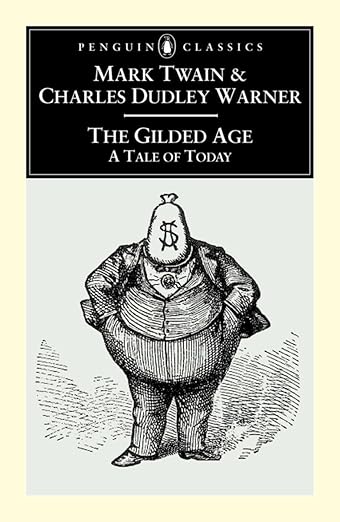
Mark Twain said, “Although history doesn’t repeat itself, it often rhymes.” We can hear it rhyming in the way Trump idolizes what Twain satirized as “The Gilded Age.” He often repeats, “We were at our richest from 1870 to 1913.”
Trump lauded President William McKinley in his Inaugural address as a “great president” and “natural business man,” who “made our country very rich through tariffs and through talent.” The President has “gilded” the Oval Office with gold decoration on the fireplace and golden figurines on the mantel. The walls are crowded with 15 gold-framed portrays of white Presidents.
Historians agree The Gilded Age was an era of “extraordinary wealth for a small class of people that largely obscured rampant poverty for many other Americans … Barons of phenomenal wealth, like John D. Rockefeller and J.P. Morgan, held tremendous sway over politicians who often helped boost their financial empires.”
It was also a time when women could not vote and children worked long hours under dangerous conditions. The racial case system know as Jim Crow represented “the legitimization of anti-black racism.” But…
The Gilded Age also gave birth to the “social gospel movement” which applied gospel ethics to the problems of a newly industrialized society. Groups like the Women’s Christian Temperance Union under the leadership of a Methodist woman named Francis Willard empowered women to confront the challenges of alcohol abuse, child labor, prison reform, and women’s suffrage. The Progressive Movement planted the seeds of social change that have continued to shape our culture but which are adamantly opposed by our Administration today.
Meeting Christ in the City

Frank Mason North (1850-1935) was one of the leaders of social gospel movement in Methodism. He was ordained in the Methodist Episcopal Church in 1872. His ministry on the streets and in the slums of New York City engaged him in the massive poverty and suffering beneath the glittering veneer of society.
North described the way he met Christ on the busy streets and in the shadowed slums of 19th Century New York City in his hymn, “Where Cross the Crowded Ways of Life.”
Where cross the crowded ways of life,
where sound the cries of race and clan,
above the noise of selfish strife,
we hear your voice, O Son of man.
In haunts of wretchedness and need,
on shadowed thresholds dark with fears,
from paths where hide the lures of greed,
we catch the vision of your tears.
The harsh realities around him led him to pray:
O Master, from the mountainside
make haste to heal these hearts of pain;
among these restless throngs abide;
O tread the city’s streets again.
North concluded with a gospel vision of the future that really is like nothing we’ve seen before.
Till all the world shall learn your love
and follow where your feet have trod,
till, glorious from your heaven above,
shall come the city of our God! (The United Methodist Hymnal, p. 427)
May it be so, even among us, even in this age.
Jim
 Jim Harnish
Reading this, I’m reminded of all the purer-religion movements that escaped the corrupted streets to create utopian colonies in the American wilderness. What folly.
Thanks, Jim…hang in there!
Beautifully written.
>