
Strangely Appropriate
This week’s installment in my Easter series for Ministry Matters is strangely — providentially? — appropriate in the aftermath of last night’s gunfire at the White House Correspondents Dinner and the deadly stalemate in the ongoing war in Iran.
Wartime Questions
Who can watch the “breaking news” in an era like this without asking the kind of questions Harry Emerson Fosdick asked in his war-time sermons? They are difficult questions people continue to ask, even when they hesitate to speak them out loud.
Why is God so silent in a world filled with noisy evil? Why, in a world of turbulent evil, can God the Almighty do no better than be a still, small voice? Why does he not speak up, and make a noise in the interest of righteousness? (Great Time to Be Alive, p. 163)
Fosdick was reiterating the psalmist’s provocative demand.
God, don’t be silent!
Don’t be quiet or sit still, God,
because—look!—your enemies are growling;
those who hate you are acting arrogantly. (Psalm 83:1-2)
Why doesn’t God get down here and do something about the ghastly mess we’ve made of things?
If Christ is risen and goes before us, why doesn’t he get busy making some rough places plain and crooked ways straight?
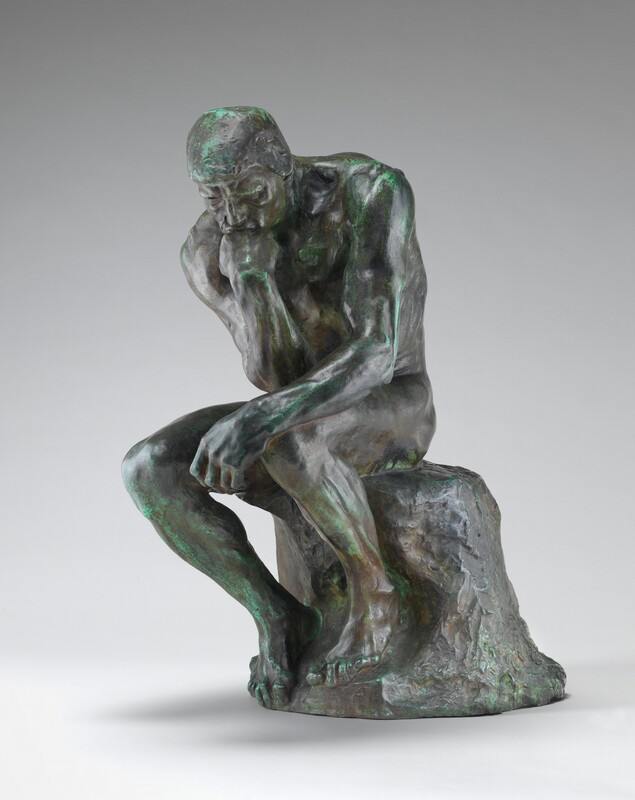
Why is evil so loud, arrogant, and intrusive, dominating the daily news cycle, while God seems like Rodin’s “Thinker” , sitting alone, his elbows on his knees, head in his hands, brooding over the shape of the world but uninvolved in it?
Intoxicated by Coercive Power
Our problem may be that we are intoxicated by use of economic, military, or political power to coerce others to do what we want done. Stephen Miller, speaking on behalf of the Trump Administration, recently announced, “We live in a world that is governed by strength, by force, by power … These are the iron laws of the world since the beginning of time.” He evidently believes time began, not in the dawn of a peaceful creation, but in the dark, deadly conflict between Cain and Able.
Fosdick named “the contrast between the blatant violence of evil and … spiritual forces [that] have behind them the might and majesty of the Eternal.” He concluded:
“In days like these we need the inward reinforcement of spiritual power, and nothing noisy can supply it … As God lives his deepest life in silence, so do we … Only when he leads us in green pastures and beside still waters can he restore our souls … When from that silent place one who knows its secret goes out again to face the world, not all its din can overawe his spirit.” (GTBA p. 171)
How God Acts
Did you notice how quietly the Risen Christ enters the resurrection stories? It took “a great earthquake” to roll away the stone (Matthew 28:2), but when Jesus showed up, he came so quietly that Mary assumed he was the gardener; so unobtrusively that the disciples on the Emmaus Road didn’t recognize who was walking with them. He entered through the locked door of the upper room without a sound. He waited in early morning silence for the fishermen to find him on the beach. Rather than step into the story with angel choirs singing Handel’s “Halleluiah,” he came in silence like the relentless servant Isaiah envisioned.
He won’t cry out or shout aloud
or make his voice heard in public.
He won’t break a bruised reed;
he won’t extinguish a faint wick,
but he will surely bring justice.
He won’t be extinguished or broken
until he has established justice in the land. (Isaiah 42:1-4)
The Psalmist’s demand that God not remain silent was answered, but not in the way we might have expected or chosen. Matthew sets the coming of Christ in the days of King Herod. Luke began with Caesar Augustus and Quirinius. They were the loud military, economic and political powers of the day.
But the gospels turn away from the noisy, powerful people to a nobody named Joseph and a pregnant girl named Mary, forced by their authoritarian rulers to confirm their citizenship in a tax office in Bethlehem. God’s voice spoke into our boisterous world, not with a shout, but with the sweat and pain of a woman in labor and the whimpering cry of a baby in a nondescript barn behind an inn.
God stepped into the ghastly stuff of our very real, very messy world, not to change us by coercion or force, but to transform us through self-giving love.
God spoke, not with the bragging voice of loveless power, but in the living Word of the powerless love which was nailed to a cross and confirmed in the resurrection as the divine power that can change the world.
God came among us, not as a thief and a bandit, but as a shepherd who knows his sheep. And in the deepest silence of their souls, the sheep know his voice. He goes ahead of them and in following, they find life and find it abundantly. (John 10:1-10)
“The Hum That Shivers”
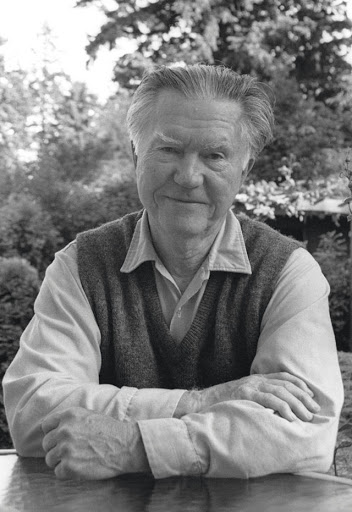
William Stafford (1914-1993) was a quiet voice in a noisy world. Like Fosdick, he was a pacifist. He developed the discipline of writing poetry in the early morning silence of work camps for conscientious objectors during World War II. In 1970, he became the 20th Consultant in Poetry to the Library of Congress.
Kim Stafford wrote, “My father pursued the utter re-creation of the world. [He] wanted to soften the hearts of the whole human family.”
In his poem entitled “Believer,” Stafford said he intended to “live by the hum that shivers till the world can sing … when the right note shakes everything.” (Early Morning, Saint Paul, MN: Graywolf Press, 2002, p. 99).
Because of the resurrection, the question is not whether God is doing something to heal the ghastly brokenness of our world, but whether we will follow the way God has chosen to do it. The Risen Christ calls us in the hum that shivers in the silence of an empty tomb but which has the power to shake everything. Those who hear his voice and follow in his steps discover “more and better life than they ever dreamed of.” (John 10:10 The Message)
Prayer
Thanks be to you for Christ our Lord. On Calvary death slew life, and yet life was conqueror; hatred slew love and love triumphed; evil slew goodness and goodness proved the stronger. Fill our hearts today with the joy of his victory.” (Fosdick, Public Prayers, p.138)
 Jim Harnish
Just wh
Jim Thanks and have a great week. SHALOM, Tom MC
>